Moving Box Calculator
Are you getting ready to move on Oʻahu, Maui, Kauaʻi, or Hawaiʻi Island? Create a moving box estimate including how many small, medium, large, XL, wardrobe boxes, dish pack boxes and specialty boxes you will need (along with tape, paper, and wrap!) with our FREE moving box calculator.
Here’s How Our Moving Box Calculator Works
This tool is designed around the way people actually move in Hawaii: condos, walk-ups, townhomes, and single-family homes, often with another leg inter-island or even the mainland.
- You input the basics. Select your home size (studio to 5+ bedrooms), how many people live at that location, and are you household more minimalistic or “stuff-heavy.” You may even flag your household goods that are extra fragile.
- We convert to the box mix for you. The input you provide will automatically convert into a realistic box mix of smalls, mediams, larges, and XL boxes, along with wardrobe and dish-packs. Heavy items go into smaller cartons to facilitate carrying up stairs and into elevators.
- We amend to the realities of the island. More closets? More wardrobe boxes. Lots of fragile kitchen and dining pieces? Either way, more dish-pack and packing paper. Stuff-heavy households get a bump to the overall count.
- You get a checklist you can share with your friends. Total counts for boxes, tape and packing materials, and a quick way to gauge truck size. You can save, print it, or email so everyone helping you pack is on the same page.
What Kind of Moving Boxes Do You Need in Hawaii?
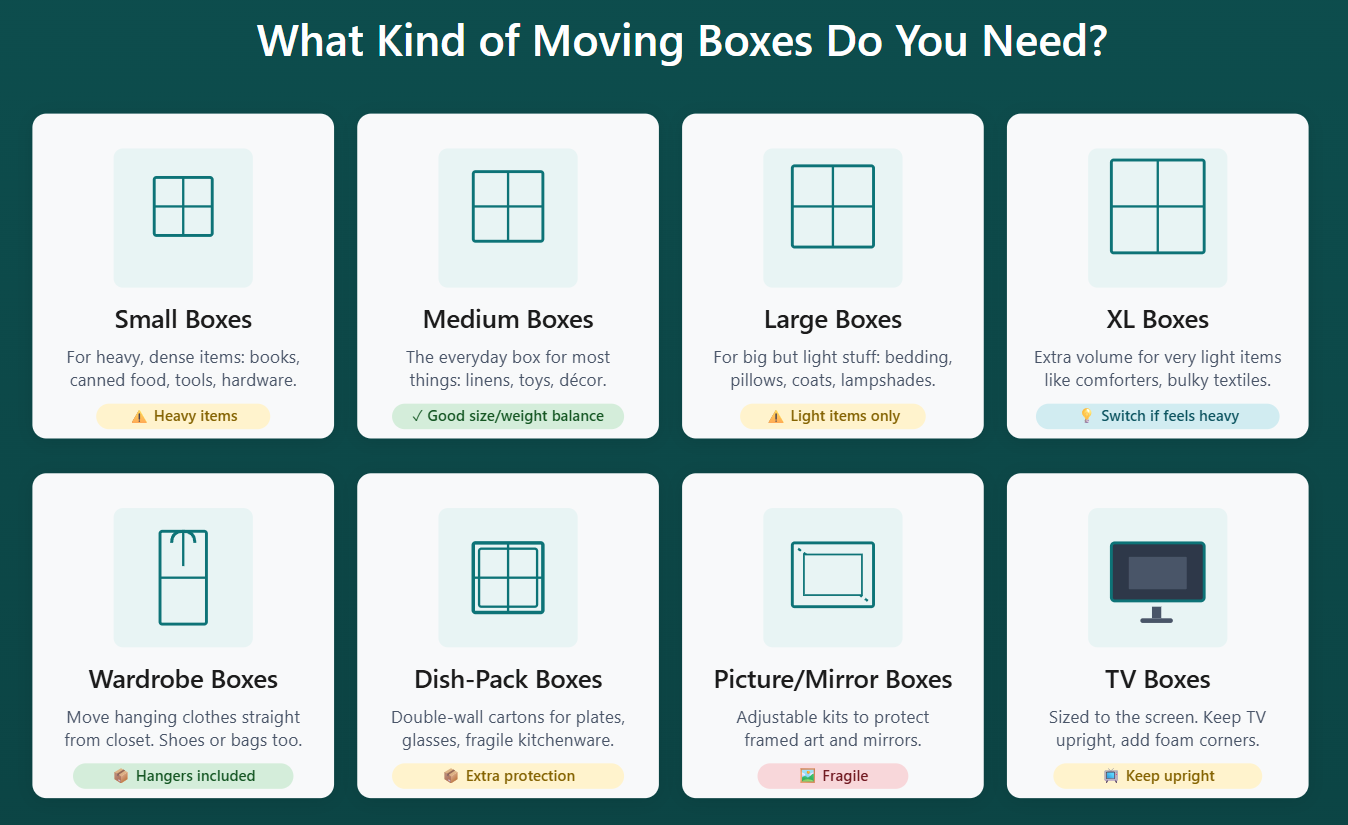
- Small boxes – For small, heavy items: books, canned goods, disassembled tools, and small decor. These are your “No one’s breaking their back” cartons on walk-ups or long hallways.
- Medium boxes – The standard mixed box for moving: linens, toys, pantry items, small appliances, bathroom supplies, etc. This box size is perfect because of the size/weight balance for condo and townhome moves.
- Large boxes – For lightweight bulky items: bedding, pillows, towels, puffy jackets, and lampshades. It is best to avoid placing books or heavy kitchenware in this box.
- XL boxes – Extra volume for very lightweight items such as comforters, duvets, and bulk textiles. If that box starts to feel too heavy, swap back to a smaller box.
- Wardrobe boxes – Great for hanging clothes that are made with moisture wicking material; less wrinkling and less handling is a win. You can place shoes or bags at the bottom. Handy for closets that you want to unpack first after you’ve arrived.
- Dish-pack boxes – Heavy-duty double-wall cartons to accommodate plates, glassware, and fragile kitchenware. Designed to take bumps of being loaded curb side to being delivered in the island.
- Picture/mirror boxes – These boxes come with adjustable kits for framed artwork and mirrors. Always use corner protectors and foam/packing, and write on the box for every panel that it is “Fragile/This side up.”
- TV boxes – Are perfectly sized to the screen. Always keep TV upright, use foam corners or padding on the screen side, and never place heavy items against the screens when transporting by truck or across an ocean.
Moving Box Sizes: A Quick Guide
Use this as a reference when buying or reusing boxes. Capacities are typical and may vary by brand.
| Box type | Typical uses | Approx. capacity / notes |
|---|---|---|
| Small | Books, canned goods, tools, hardware | ~1.5 cu ft |
| Medium | Small appliances, toys, linens, pantry items | ~3.0 cu ft |
| Large | Bulky but light items (bedding, pillows) | ~4.5 cu ft |
| XL | Very light, high-volume textiles (comforters, duvets) | ~6.0 cu ft |
| Dish Pack (double-wall) | Plates, glassware, china, fragile kitchenware | ~5.2 cu ft |
| Wardrobe (with bar) | Hanging clothes; shoes/bags at the bottom | Capacity varies by box height/width |
| Picture/Mirror kit | Framed art, mirrors (adjustable panels) | Kit; size adjustable |
| TV box | Flat-screen TVs (packed upright with corner foam) | Match to TV diagonal |
Hawaii-Specific Packing Suggestions: Condos, Walk-Ups, and Sticky Humidity
Moving to Hawaiʻi comes with some added considerations. Please keep this in mind as you read through your calculator results.
- Be conservative with box size for stairs. If you are in a walk-up in either Honolulu, Hilo, or Līhuʻe, you would rather have more small and medium boxes, than a few large or oversized boxes.
- Pack for moisture and salt air. When packing items that may not do well to do with moisture (for example, documents, electronics, and certain fabrics), consider plastic bins or garbage bags lined inside of boxes. This is especially important if items will be in storage for a longer period or in a multi-day move over the ocean.
- Keep your “first week” boxes separate from main boxes. Label a few boxes “Open First – Hawaiʻi” and include essentials you are likely to need right away. Items in this box could include sheets, basic kitchen items, beach towels, work clothes, toiletries, and any other necessary household items. This adds a layer of convenience and lowers stress if shipments are delivered on different days.
- Boxes can always be free grocery boxes, just do not make them too heavy. Used boxes are acceptable to use, just do not use cheap cardboard boxes if they will be damp and possibly wet. In our humid climate, cardboard that is damaged or old breaks down even quicker from multiple moves.
Frequently Asked Questions
What is a moving box?
A moving box is a strong corrugated carton made to withstand stacking, lifting, and transporting. Boxes come in standard sizes (small, medium , large, XL) to keep weight manageable, while specialty boxes (wardrobe, dish-pack, picture/mirror, TV) protect fragile or hard to pack items when moving long distances and by boat.
What is the cheapest way to get moving boxes in Hawaiʻi?
The easiest and cheapest way to get moving boxes is through local grocery stores, liquor stores, and big box stores after restock day. , Also seek out community groups and “buy nothing”/swap pages and ask for free boxes. Remember, check every box for moisture, tears, and insect damage. If something smells musty or feels wet, throw it away. The humidity here is hard on the cardboard—anything older wouldn’t survive.
How many boxes do I need for an inter-island move?
The number of boxes you are going to need is, normally, comparable to a same-island move if both homes are the same ‘size’. The only difference is packing ‘well enough’: inter-island shipments have more handling (truck, port, barge, delivery), so you pack dish-packs, have extra packing, and clearly label the fragile boxes. You can estimate with our calculator, and your mover will be able to adjust for volume and container space.
What are the proper methods for taping and labeling boxes?
Use the “H-tape” system for taping your boxes. One strip is applied along the bottom of the center seam of the box, with two strips applied vertically along the edges of the box to form an “H”. If packing a heavy box, you can add an additional tape strip down the center seam of the box for added support. Label boxes on the sides (not just the top) indicating what room the box belongs in as well as the main contents of the box. If there are fragile contents in the box, you will want to denote that as well. For inter-island or mainland moves, you’ll want to include your last name and destination city on your box.
Will the calculator tell me what size truck or container I need?
The calculator will provide you with a general hint of truck size based on the estimated count of boxes you would be bringing and the typical furniture for that size of home. You should basically use this as a starting point. It is always important to confirm the final truck size or container size with your mover or rental company because they will be considering furniture, outdoor items, and perhaps more additional stops for storage and what-not onto these lists as well as the boxes that you are bringing as well.